Understanding Sliding Window: The Train Window
Discover how sliding window technique works through an engaging train journey analogy. Learn why two pointers are better than one for many problems.
Discover how sliding window technique works through an engaging train journey analogy. Learn why two pointers are better than one for many problems.
Author
Mr. Oz
Date
Read
5 mins
Level 1
Author
Mr. Oz
Date
Read
5 mins
Share


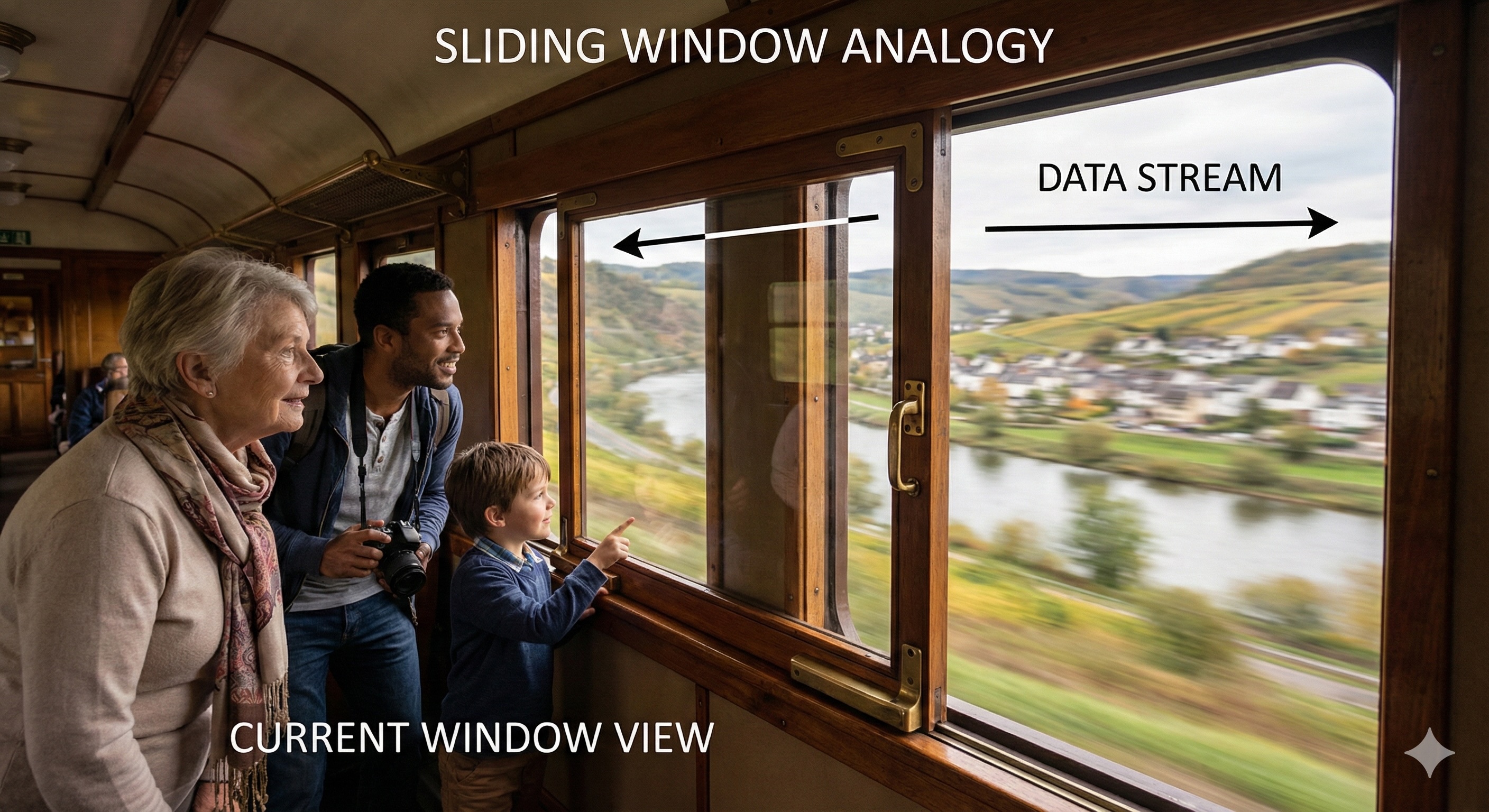
Imagine you're on a train journey through a beautiful landscape. You look out the window, but you can only see a portion of the scenery at once — just what fits within your window frame. As the train moves, your view slides along, revealing new scenery while old scenery disappears behind you.
This is exactly how the sliding window technique works in computer science!
Let's break down the train journey:
In programming terms:
Imagine finding the maximum sum of 3 consecutive numbers in this array:
Our window of size 3 starts at position 2, covering [3, 7, 1] which sums to 11.
We'll slide this window one position at a time, checking if we find a larger sum!
You might wonder: "Why not just check every possible group of 3 numbers?"
With the sliding window, we're much smarter:
The sliding window technique isn't magic — it has specific uses:
The key insight: Sliding window trades brute force for efficiency. Use it when you're looking for something in a contiguous portion of data.
Just like train windows can be different sizes:
Ready to go deeper?
Level 1
Learn the fundamentals of sliding window through an engaging train journey analogy.
Author
Mr. Oz
Duration
5 mins
Level 2
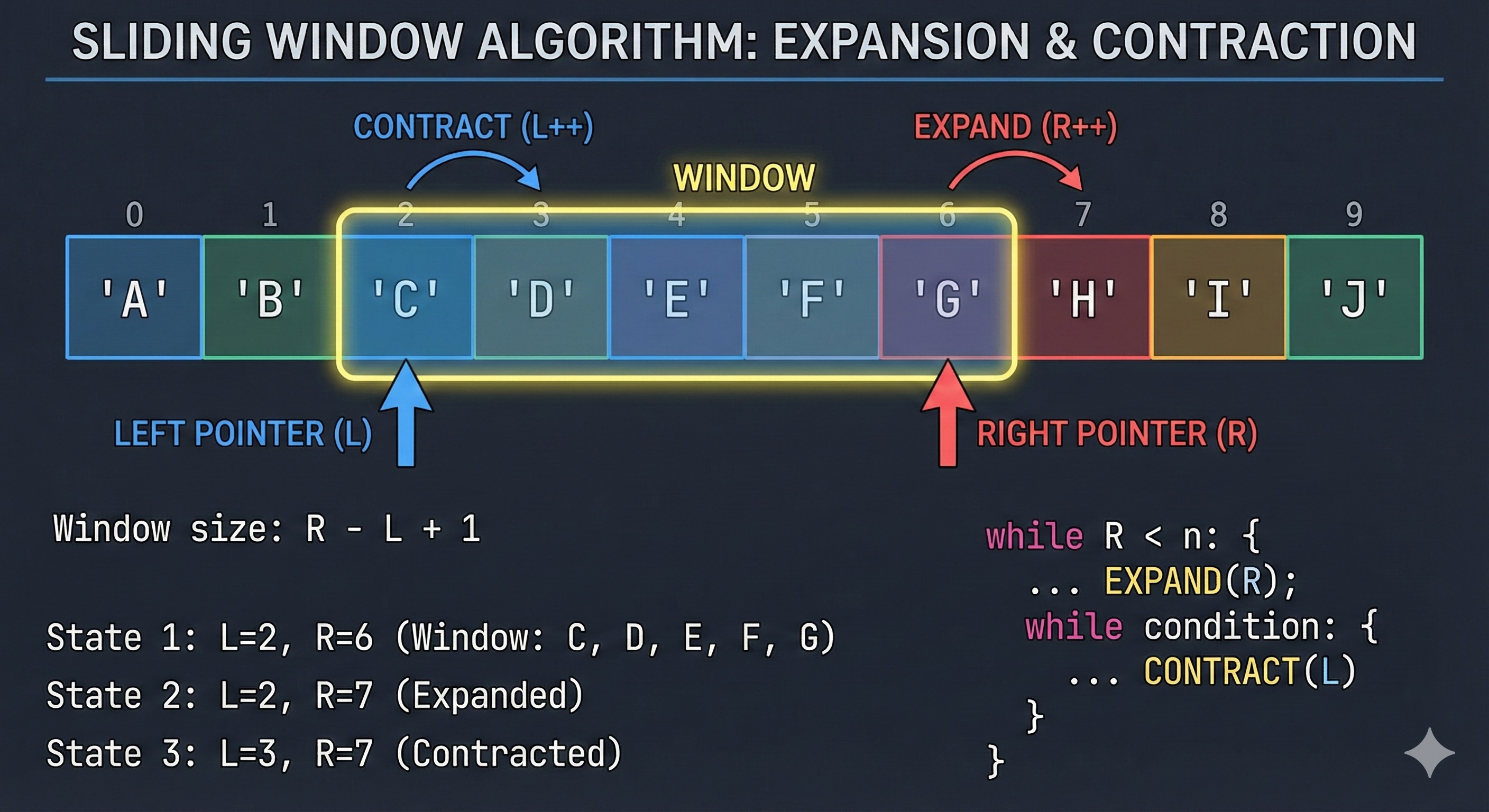
Implementation details, fixed vs variable-size windows, common patterns, and code examples.
Author
Mr. Oz
Duration
8 mins
Level 3
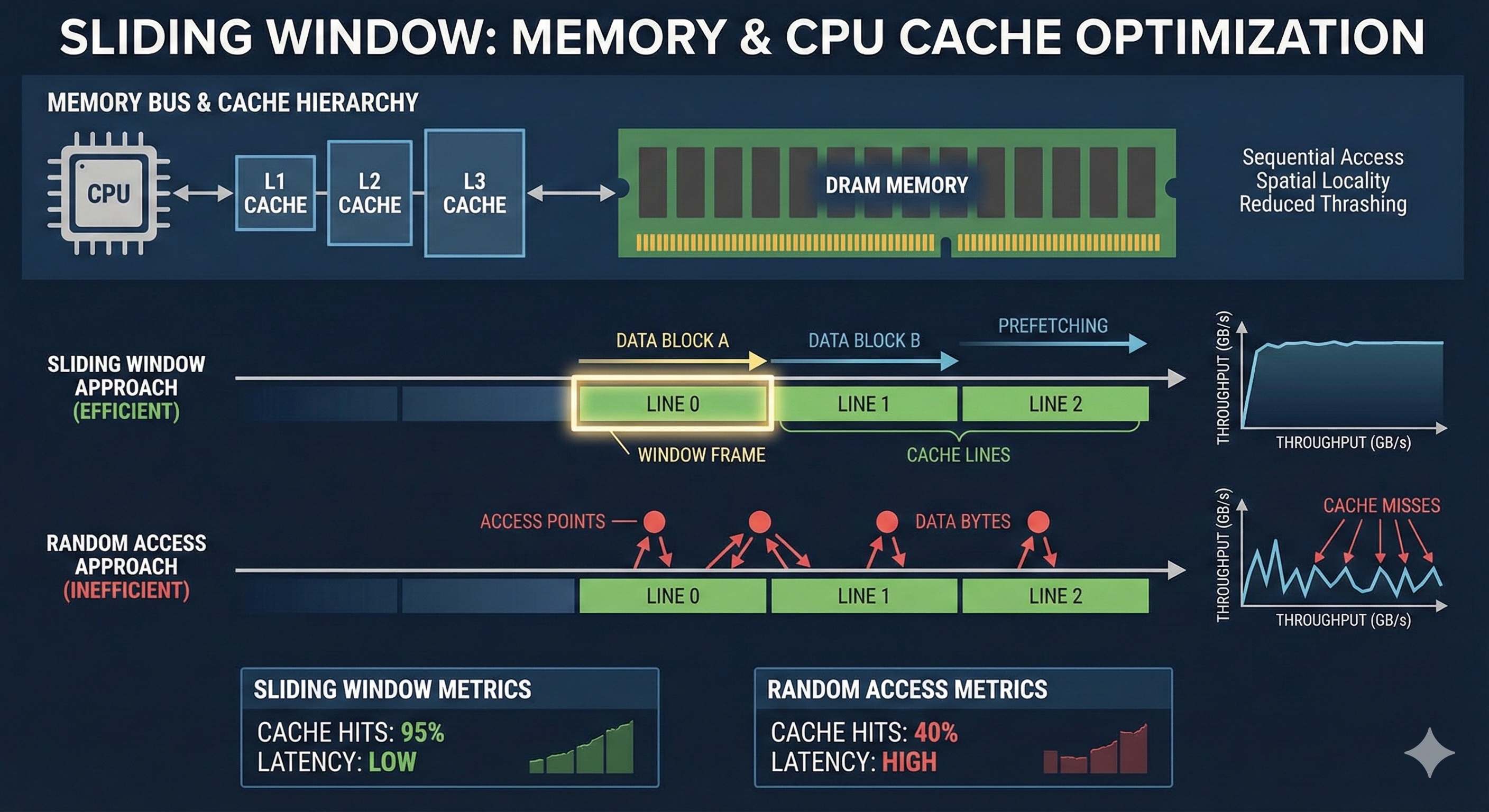
Advanced optimization, memory patterns, and when to use sliding window vs. alternatives.
Author
Mr. Oz
Duration
12 mins