Understanding Recursion: The Mirror Room
Discover how recursion works through an engaging mirror room analogy. Learn the elegance of functions that call themselves.
Discover how recursion works through an engaging mirror room analogy. Learn the elegance of functions that call themselves.
Author
Mr. Oz
Date
Read
5 mins
Level 1
Author
Mr. Oz
Date
Read
5 mins
Share


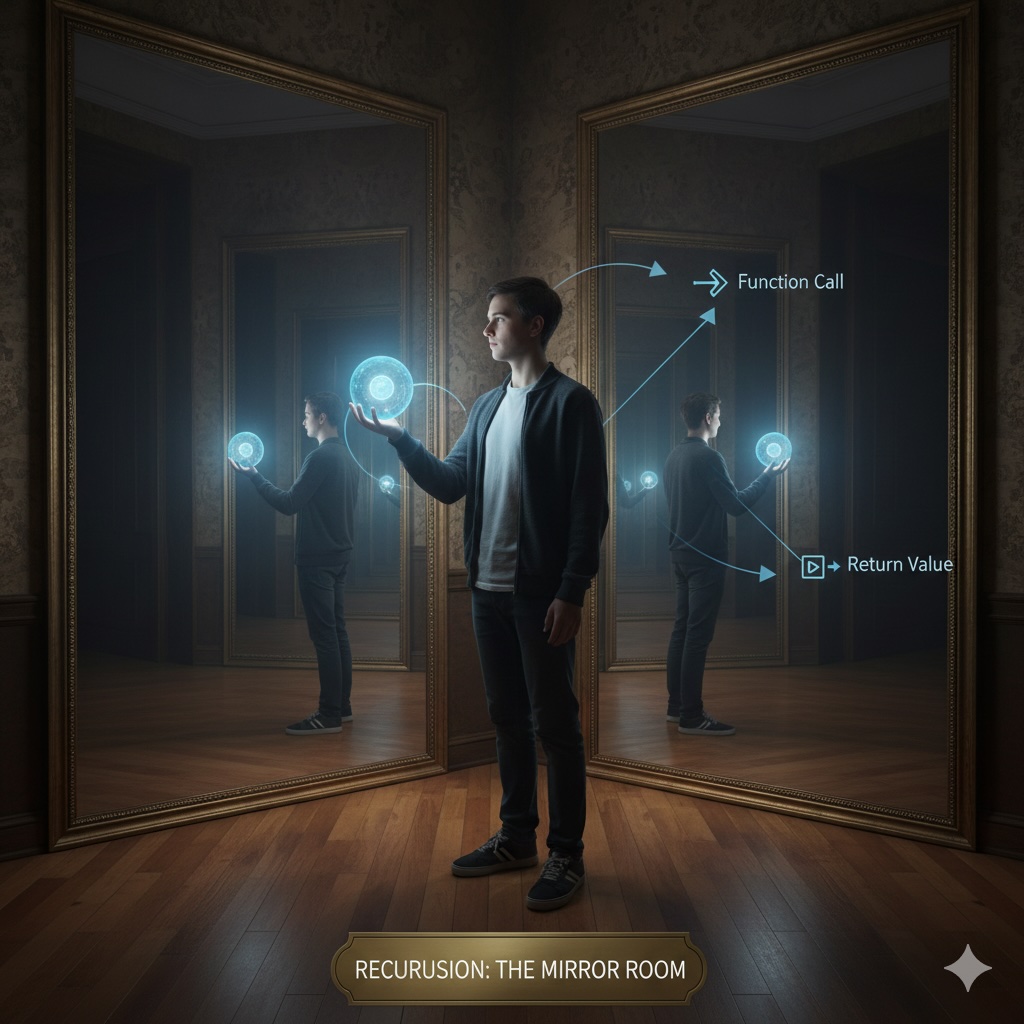
Imagine you're standing in a room with two mirrors facing each other. When you look into one mirror, you see an infinite reflection of yourself stretching into the distance. Each reflection shows another reflection, and another, continuing endlessly.
This is exactly how recursion works in programming!
Let's break down the mirror room:
In programming terms:
Imagine counting down from a number. Here's how recursion thinks:
To count down from 5:
Say "5"
Then count down from 4
Say "4"
Then count down from 3
...and so on...
When at 0, stop!
Each countdown is a smaller version of the same problem. Eventually, you reach 0 and stop — that's the base case!
You might ask: "Why not just use a loop?" Great question! Recursion shines when:
Like anything in programming, recursion has trade-offs:
The key insight: Recursion trades some memory for code elegance. Use it when the problem naturally breaks down into smaller, similar versions of itself.
Ready to go deeper?
Level 1
Learn the fundamentals of recursion through an engaging mirror room analogy.
Author
Mr. Oz
Duration
5 mins
Level 2
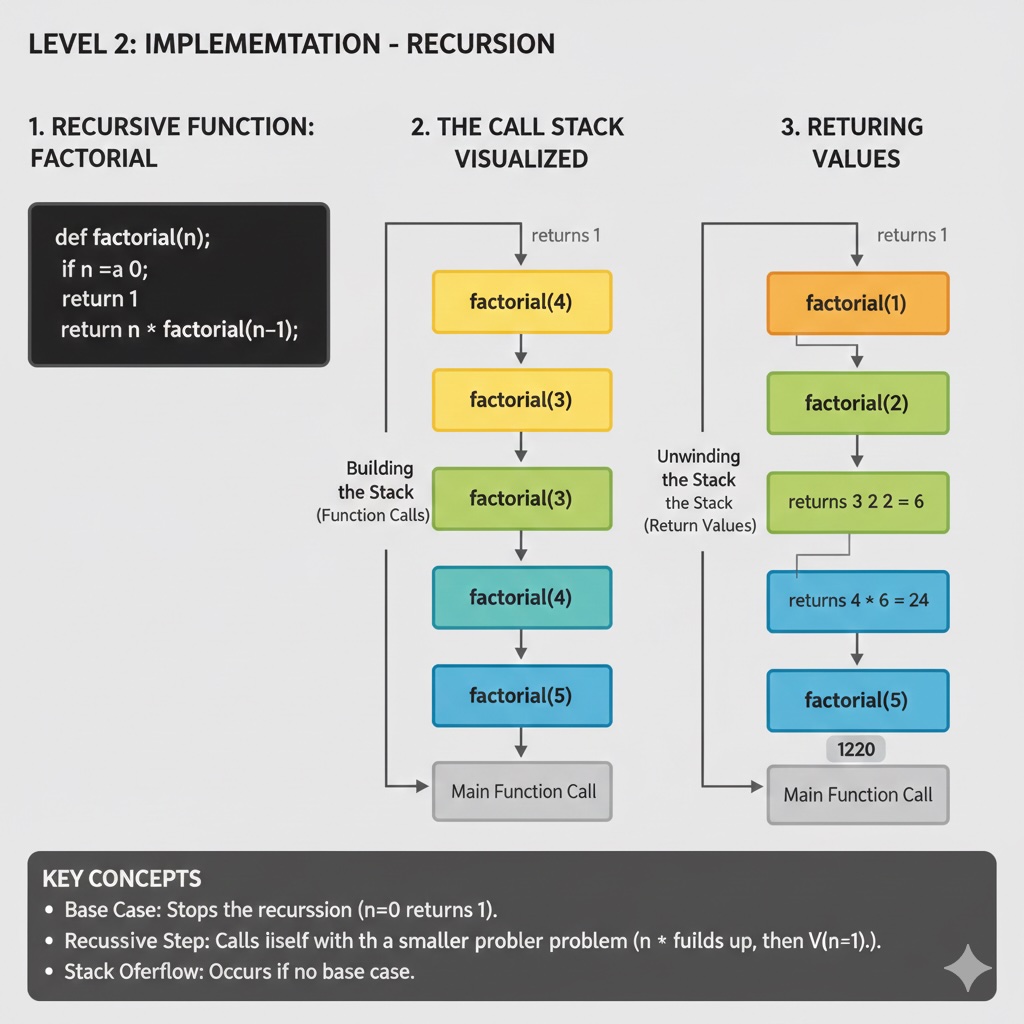
Implementation details, base cases, recursive cases, and common patterns.
Author
Mr. Oz
Duration
8 mins
Level 3
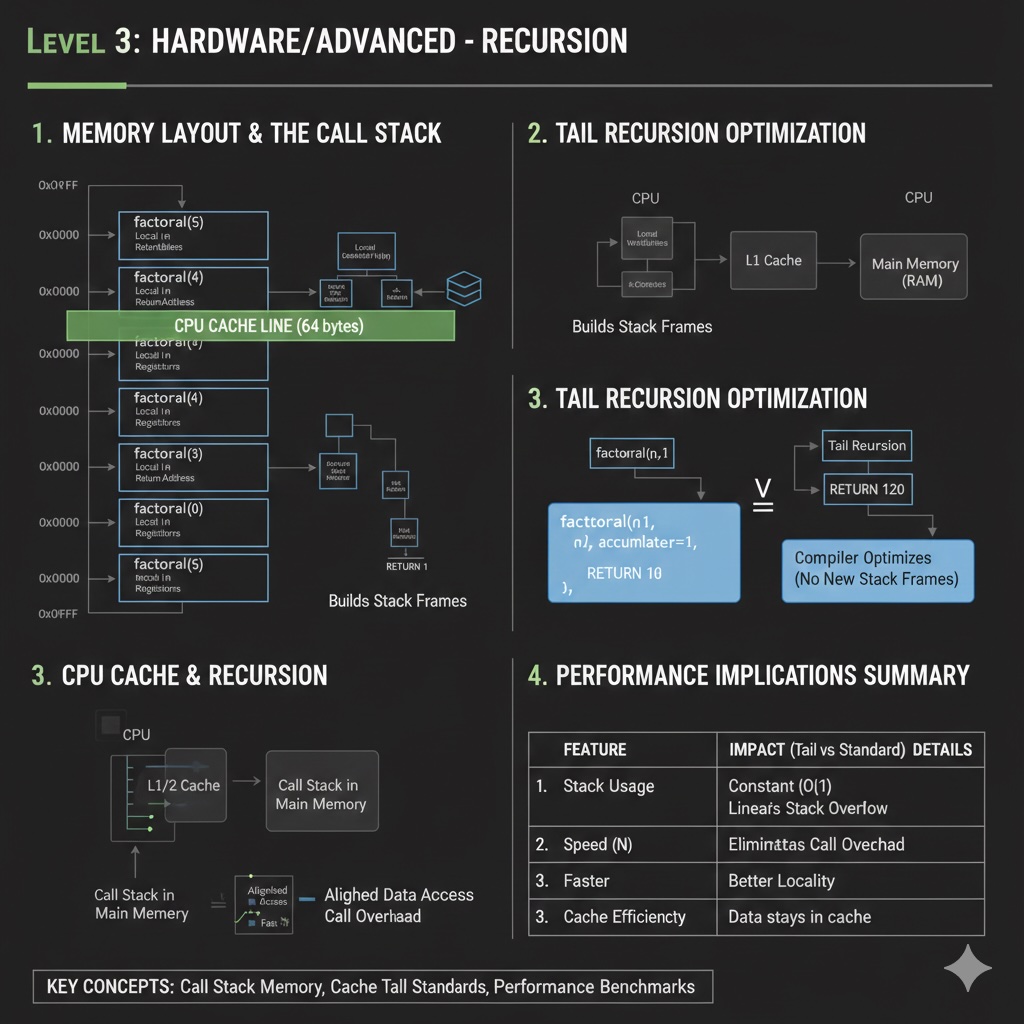
Call stack internals, tail recursion optimization, and memory considerations.
Author
Mr. Oz
Duration
12 mins