Understanding Binary Search: The Number Guessing Game
Learn how binary search works through an engaging number guessing game analogy. Discover why halving your search space is the key to efficient searching in sorted data.
Learn how binary search works through an engaging number guessing game analogy. Discover why halving your search space is the key to efficient searching in sorted data.
Author
Mr. Oz
Date
Read
5 mins
Level 1
Author
Mr. Oz
Date
Read
5 mins
Share


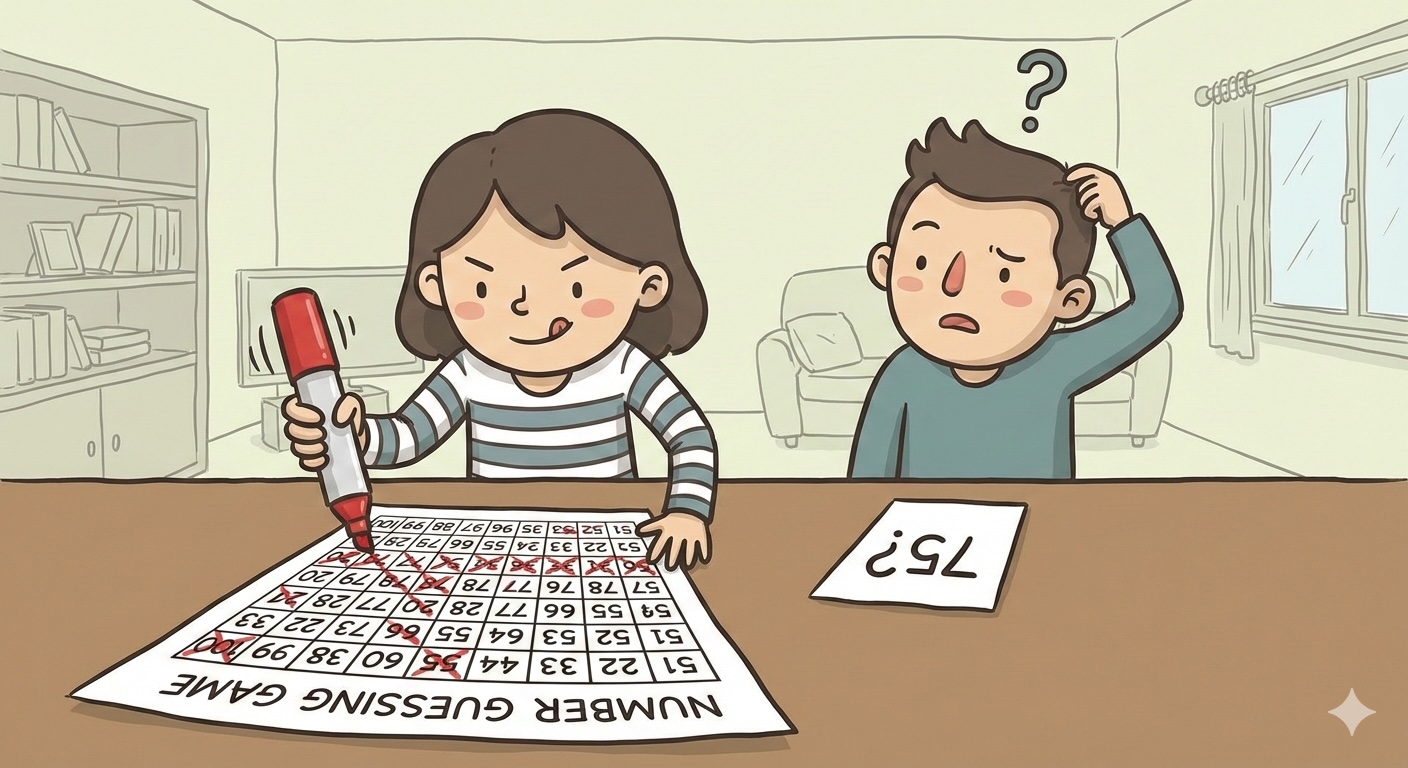
Imagine you're playing a number guessing game. Your friend Alice thinks of a secret number between 1 and 100. Your job is to guess it. You have unlimited guesses, but you want to find the number as quickly as possible.
You have two strategies: Bob the Brute Forcer vs Sarah the Strategist.
Bob says, "Easy! I'll just guess 1, then 2, then 3, and so on. Eventually I'll hit Alice's number!"
In the worst case (Alice picked 100), Bob would need 100 guesses to find the number.
This is what linear search does—checks every element one by one until it finds a match. If you have a million items, you might need a million checks!
Sarah says, "That's inefficient! Here's my strategy:"
Sarah only needs 7 guesses maximum to find any number between 1 and 100! That's because log₂(100) ≈ 7.
Let's say Alice's secret number is 73:
With each guess, Sarah halves the search space. That's the magic of binary search!
Binary search is like playing the number guessing game perfectly. Instead of checking each element one by one (like Bob), it:
But there's one crucial requirement: The data MUST be sorted! Binary search only works on sorted arrays.
Ready for more?
Level 1
Learn the fundamentals of binary search through an engaging number guessing game analogy.
Author
Mr. Oz
Duration
5 mins
Level 2
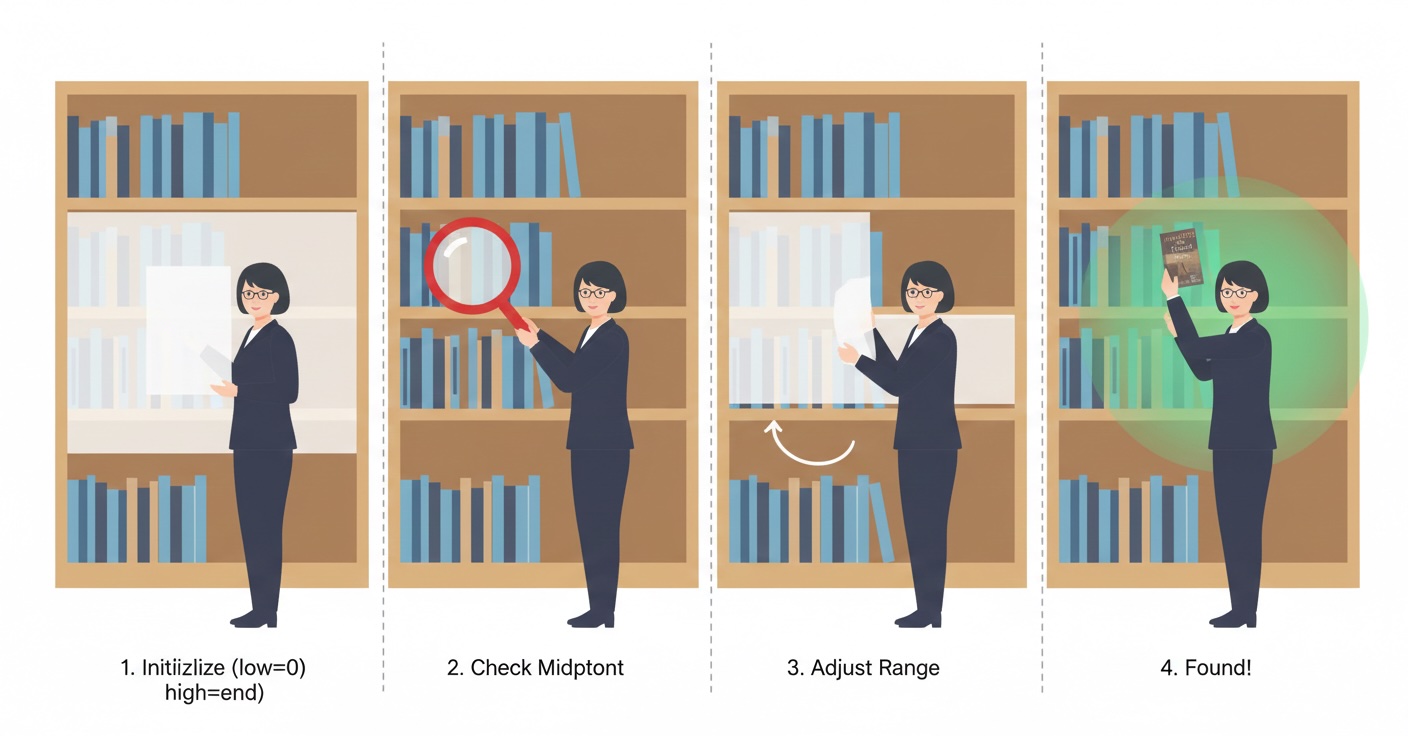
Implementation details, edge cases, integer overflow, and production-ready code examples.
Author
Mr. Oz
Duration
8 mins
Level 3
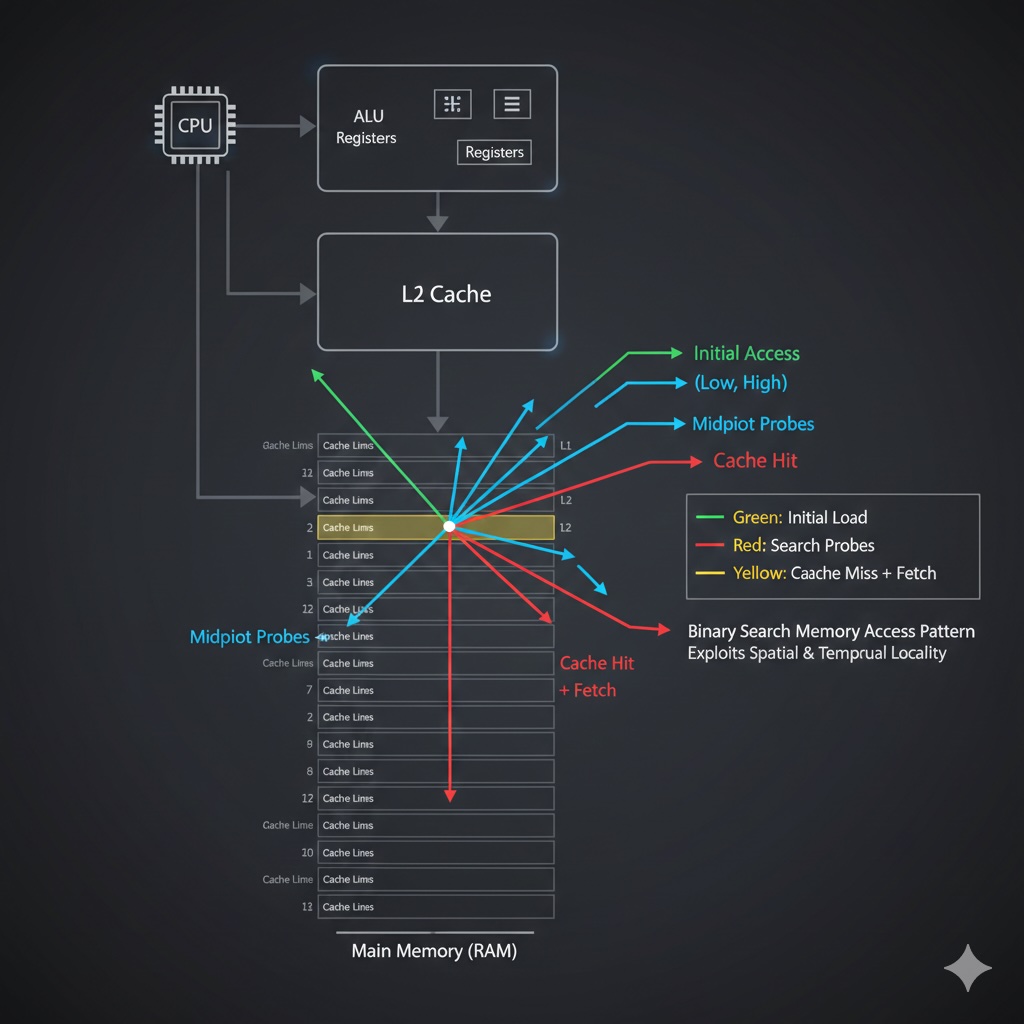
Memory layout, CPU cache performance, branch prediction, and real-world optimization techniques.
Author
Mr. Oz
Duration
12 mins