Understanding Stacks: Implementation Guide
Dive into the technical implementation of stacks. Learn array-based vs linked list stacks, core operations, and production-ready patterns.
Dive into the technical implementation of stacks. Learn array-based vs linked list stacks, core operations, and production-ready patterns.
Author
Mr. Oz
Date
Read
8 mins
Level 2
Author
Mr. Oz
Date
Read
8 mins
Share


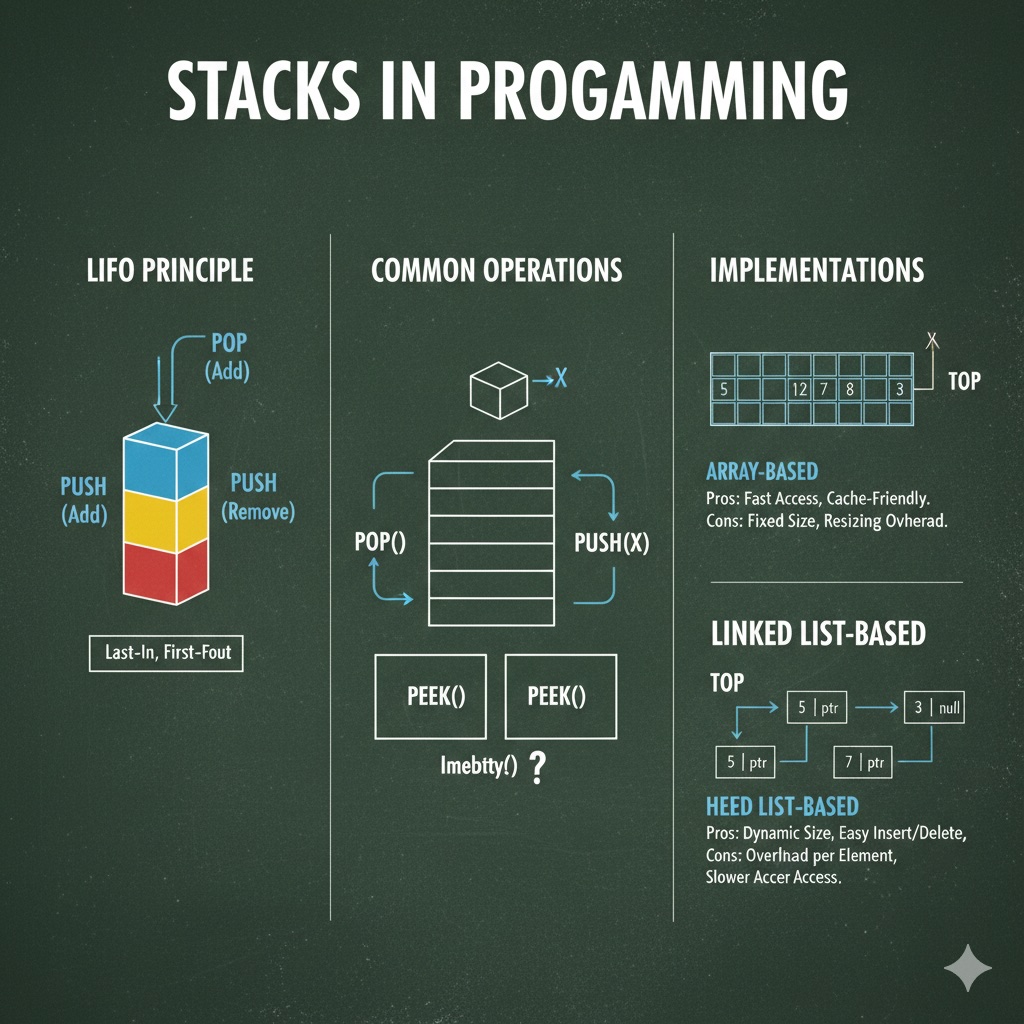
Using an array (or dynamic array) is the most common way to implement a stack. It's simple and cache-friendly.
# Python implementation using a list
class Stack:
    def __init__(self):
        self.items = []

    def push(self, item):
        self.items.append(item)

    def pop(self):
        if not self.is_empty():
            return self.items.pop()
        return None

    def peek(self):
        if not self.is_empty():
            return self.items[-1]
        return None

    def is_empty(self):
        return len(self.items) == 0

    def size(self):
        return len(self.items)

# Usage
stack = Stack()
stack.push(10)
stack.push(20)
print(stack.peek())  # 20
print(stack.pop())   # 20
print(stack.pop())   # 10
Time Complexity: Push O(1), Pop O(1) (amortized), Peek O(1)
Space Complexity: O(n) where n is the number of elements
For unbounded stacks or when you need guaranteed O(1) operations, use a linked list. Add/remove at the head.
# Python implementation using linked list
class Node:
    def __init__(self, data):
        self.data = data
        self.next = None

class LinkedListStack:
    def __init__(self):
        self.top = None

    def push(self, item):
        new_node = Node(item)
        new_node.next = self.top
        self.top = new_node

    def pop(self):
        if not self.is_empty():
            data = self.top.data
            self.top = self.top.next
            return data
        return None

    def peek(self):
        if not self.is_empty():
            return self.top.data
        return None

    def is_empty(self):
        return self.top is None
Pros: Guaranteed O(1) for all operations, no resizing overhead
Cons: Extra memory for pointers, less cache-friendly
| Operation | Description | Time |
|---|---|---|
| push(item) | Add element to top | O(1) |
| pop() | Remove and return top element | O(1) |
| peek() | Return top element without removing | O(1) |
| is_empty() | Check if stack has elements | O(1) |
| size() | Return number of elements | O(1) |
The most common stack interview problem is matching parentheses. Here's how it works:
def is_valid(s: str) -> bool:
    stack = []
    mapping = {')': '(', '}': '{', ']': '['}

    for char in s:
        if char in mapping:  # Closing bracket
            if not stack or stack.pop() != mapping[char]:
                return False
        else:  # Opening bracket
            stack.append(char)

    return len(stack) == 0

# Examples
print(is_valid("()"))      # True
print(is_valid("()[]{}"))  # True
print(is_valid("(]"))      # False
print(is_valid("([)]")) # FalseMastered the basics?
Level 1

Learn the fundamentals of stacks through an engaging pancake stack analogy.
Author
Mr. Oz
Duration
5 mins
Level 2
Implementation details, array vs linked list stacks, and common operations.
Author
Mr. Oz
Duration
8 mins
Level 3
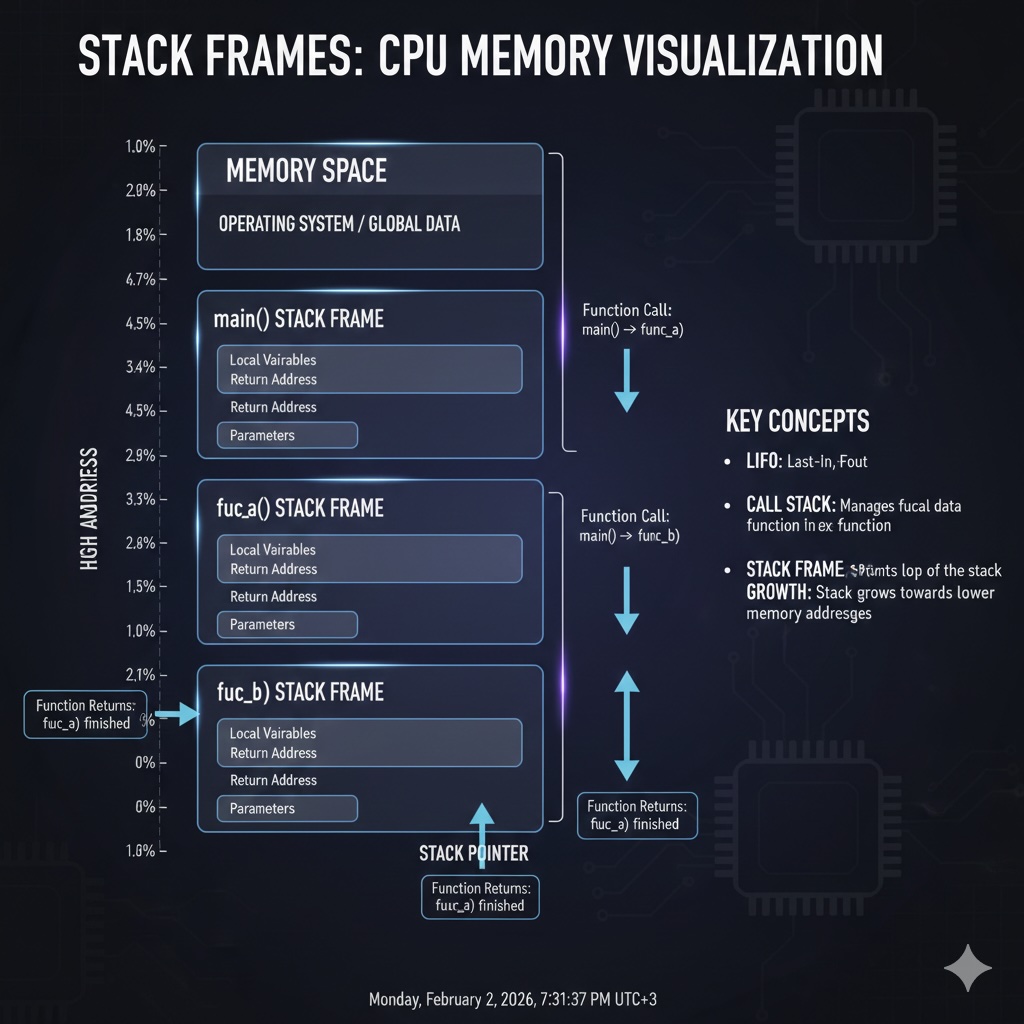
Memory layout, call stacks, recursion, and performance considerations.
Author
Mr. Oz
Duration
12 mins